Wednesday, June 29, 2022

A Course in Rhode Island History #1: Background and Rationale

In 2019, the RI General Assembly adopted new regulations for History and Social Studies standards, requiring that they “be designed to instill respect for the cultural, ethnic, and racial diversity of this state, and for the contributions made by diverse cultural, ethnic, and racial groups to the life of this state.” This resulted in the formation of the Rhode Island History and Social Studies Advisory Committee (RIHSSAC), which from 2020 to 2022 wrote a new set of standards that will be much shorter and more succinct than the current GSEs while including Culturally Responsive and Susteaining Education standards. These are presently in the final stages of approval -- I would say more about these but they are still in "draft" mode and are "confidential." Hopefully the final version will be coming out...soon?

Then in 2021, the RI Legislature codified this and further required that these new “standards shall include, but not be limited to, the history of the state of Rhode Island, representative government, the rights and duties of actively engaged citizenship, and the principles of democracy.” Also in 2021, the state passed legislation requiring that all "middle and high school students attending public schools, or any other schools managed and controlled by the state, shall demonstrate proficiency, as defined by the local school district, in civics education that shall also satisfy half credit or course requirement in history and social studies."

To that end, I am putting together a proposed one-semester course in Rhode Island History that will both meet the CRSE requirements of the new standards and teach civics through the lens of Rhode Island History. After running this idea past my department head and consulting with educators of RI History at the RIHS and URI, I began drafting a proposasl for the course. At first the proposal was just a brainstormy list of topics that kept getting longer and longer...my dept. chair suggested that I reorganize the list into subtopics that could become units of study, and I also decided each unit should have a set of guiding questions to also frame the investigation of each subtopic. My dept. chair liked this a lot better and after we went over each one he became increasingly enthused about the course. Then the two of us ran a one-unit breakdown of the propoasl by the assistant principal to see if she thought the course was viable and whether the organization was on the right track. She gave me a simialrly enthusiatic go-ahead to develop a full course proposal that could go through the approval process in the fall. I am heartened by the reception to the course I gotten so far, and my goal is to have the proposal fleshed out before the end of July.

Over the next month I will be exploring the various topics to be included in this course proposal. Below is the list of units and subtopics. In the days to come I will discuss the content, guiding questions and source materials for each unit. I am not married to the wording of any of these, and some of them will likely change as I continue to think and rethink about them.

I. Intro: Rhode Island Geography and Narragansett Bay

    Geology and Physical Geography
    Narragansett Bay and the Atlantic
    Political Borders

II. The Founding of Colonial RI and Roger Williams

    Roger WIlliams c. 1603 - 1636
    Roger Williams and Rhode Island’s Four First Towns
    Roger Williams and Freedom of Religion
    First Amendment: Establishment Clause and Free Exercise Clause

III. The Narragansett People

    First People: Archaeology and Algonquin Oral Histories, 12,000 BP to c. 1500 CE
    Effects of First Contact and European Interaction on Algonquin Lifeways, to 1636
    The Narragansett Before and After King Philip's War
    The Narragansett in Jim Crow Era Rhode Island
    Narragansett Tribal Recognition: 1975 to Present

IV. Slavery, Emancipation and Civil Rights for BIPOC Rhode Islanders

    The Colonial Slave Trade, Slavery, and Rhode Island’s Plantation System
    Gradual Emancipation and Black Rhode Islanders in the Antebellum Period
    African Americans and Asians in Jim Crow Era Rhode Island
    The Civil Rights Movement in Rhode Island
    Post-1960s Demographics and Immigration

V. Rhode Island’s Economy

    Intro (Colonial RI): The Land, The Bay, and the Atlantic Market, 1636-1790
    Rhode Island and the Industrial Revolution, 1790 - 1860
    Post-Civil War Industrialization: Peak and Decline of Rhode Island Manufacturing
    Rhode Island in the Cold War: the US Navy, Electric Boat, The Interstate, and the Rise of the Suburbs
    Rhode Island in the 21st Century

VI. Rhode Island Democracy: Demographics and Politics

  • Colonial era

    1. Rhode Island in the 17th Century: Patents and Charters, Boundaries and Wars
      Rhode Island in the 18th Century: New Towns and the Providence/Newport Rivalry
      Discontent and Revolution: The War for Independence in RI

  • Antebellum Era

    1. Anti-Federalism, The Country Party, and the US Constitution
      The Dorr Rebellion
      Rhode Islanders in the Civil War

  • Post Civil War

    1. Gilded Age Rhode Island: Wealth, Immigration and Urbanization
      Political Machines and the Limits of Progressivism in Rhode Island
      The Women’s Suffrage Movement in Rhode Island

  • Twentieth Century

    1. Republicans vs Democrats and the Fight for the State House
      Rhode Islanders in WWII
      Reynolds v. Sims and redistricting (1964), the 1986 Constitutional Convention, and Separation of Powers (2004)

  • The Present Day

    1. Rhode Island in the 21st Century

    Tuesday, June 28, 2022

    A History Garden (Slight Return)

    I knew it'd been some time since I had last posted anything here, but if you asked how long exactly I couldn't have guessed. I knew It Must Have Been Years, and I was only slightly surprised that it was well over FOUR. It really could have been more than that years, or less than that years. You can really lose track of time as time goes by. At any rate I deliberately took a years-long break from some activities to focus on other ones, so as not to lose the time going by while I had it. Writing and researching history is very time consuming, so I made a concious choice to put my time, effort, and energy into areas of my life that had a finite time-span and only return to this blog once I had time to do it again.

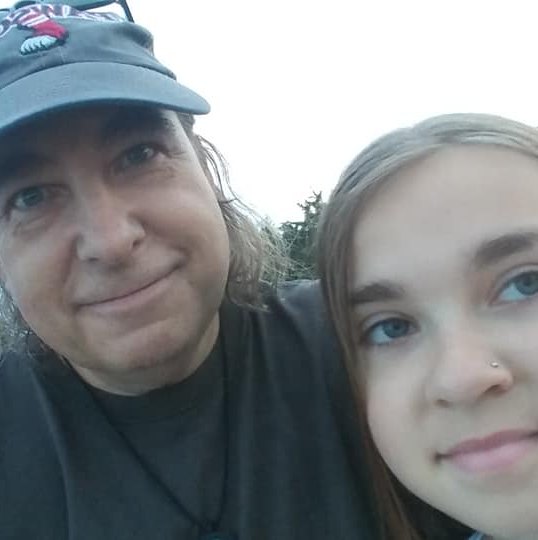
    Priority One was to reformat my life after my last significant relationship ended. First and foremost I decided to spend as much time as possible with my daughter before she hit her teen years (she had just turned 6 when the split happened -- see image right). I can say that was the best decision I made; my daughter is now 14 (see image below) and she is fully engaged with devloping non dad-related teenage autonomy. But those years of us being thick-as-thieves established the bedrock that our current relationship firmly rests on. And I will never regret not having spent more time with her because I was busy blogging...

    See that path in the blog header with the planters and paving stones and black and red mulch? It was the garden path leading to the front door of my house, which I still co-owned with my ex after we split up. The mortgage had been upside-down since '08 and it was unsellable when things ended, unless I wanted to foreclose and go bankrupt. The bank had made clear a short sale was not in the cards. It took years, but between the housing market slowly coming back from the subprime mortgage crash and budgeting my finances to pay down the mortgage, I was eventually able to sell the house and break even. Quick plug for my realtor Debbie Chennisi. If not for her relentless hard work, I never could have sold that hot mess without a foreclosure that would have bankrupted me.

    From a distance it didn't look like a hot mess though. It is in a great location, a quiet cul-de-sac only 5 minutes from RT 95 one way and the Centre of New England shopping center the other. It's got Lake Tiogue in the back, a garden, chickens and a chicken coop and this nicely-mulched stone pathway leading to the front door... But because my priority had entirely been to pay down the mortgage the place had a LOT of deferred maintenance. It needed a new roof. New gutters. Trees that needed to be taken down before they fell on someone's house. And there were several other issues that structural engineers had signed off on. For instance, in 1965 the entire nieghborhood was built on a miles-wide sand deposit left by the last ice age. So that crack in the foundation? Most of the houses on my street had the same cracked foundation our house had, and it had stoppped settling long before we moved in in 2005. All the stuff wrong with the place was in the disclosure and home inspection. Still, I never thought it was going to sell at the break-even price. But the housing market went ballistic once the pandemic hit, so even with all these problems and going under contract with three different buyers, eventually it sold as-is for the price I was asking!

    There was an immense sense of freedom and relief when I drove away from there for the last time...

    Meanwhile as all this was happening I was also still teaching full-time, coordinating Model Legislature statewide, and was handed the keys to the RI Social Studies Association (which I took only with great reluctance -- more on that in a future post). Around the same time retired archivist Peter Bennett joined WRICHS, so I gladly handed the responsibility for the WRICHS Archive to him and took over the vacant position of WRICHS Historian. There was an opportunity there to kill two birds with one stone, and I began wrting articles for The Hinterlander about mill villages in the south-western corner of RI that I am also using as core drafts for chapters in my "Lost Mill Towns of South County" book project. In the winter of 2019 I also put together a related mill-preservation presentaion for HistoryCamp Boston for March 2020. Then as luck would have it, HistoryCamp 2020 was scheduled to take place the same weekend that the pandemic shut down the entire country. So much pandemic hiatus stuff... But now that things are opening back up, I'll be giving that postponed presentation for HistoryCamp 2022 this August.

    So skip to the end, I have kept a small number of public history and service projects going while I mostly spent quality time with my daughter, paid down the mortgage and sold my house. Other irons in the fire, I either quit entirely or set them on hiatus. But now I have the time, so I am picking up my pen and keyboard and starting to blog again.

    Shortly after I first started A History Garden I asked an online friend of mine, who has a very awesome blog to take a look at it for some feedback. This is what she said:

    "I can unreservedly say that I love your blog. I love the Rhode Islandiness of it, the strong individual voice and sense of humor, your original photographs and the mixture of longer essay form with shorter entries and reviews. The only thing you have to do, as far as I'm concerned, is post more" [emphasis mine].
    I have thought much about these words of advice and encouragement fron Liv since she wrote them to me so many years ago. The number of views some of my articles have gotten, on a blog that has been for all intents and purposes moribund for years, surpasses the number of students I've had in over thirty years of teaching. This is really such an amazing medium as a public historian for reaching an audience. Therefore my goal, if I am really restarting my blog, is to post something every day. Even if all it is is very short or a quote from so-and-so, or something I wrote for some other purpose. My goal is to share ideas and history with whoever is interested. The pathway in the header is no longer my front yard, but my path forward here is clear nonetheless.

    Gonna post more, Liv.

    And in case all this wasn't enough for your slight return pleasure, here's another...

    Friday, February 23, 2018

    The Lost Mill Towns of South County, Post #1 - HistoryCamp Boston 2018

    This February vacation I began thinking about the next research project I would like to work on. This one has it's genesis in a conversation I had with my friend Chris Greene back in 2003. In fact, it was one the last conversations I had with Chris before he died. We were discussing potential topics for my MA thesis after my initial proposal had been rejected. Chris mentioned that in a conversation he had with Dr. William Metz, that Dr. Metz had discussed of someday working a book project revolving around "The Lost Mill Towns of South County." It didn't sound like a viable thesis topic, but the idea stuck with me. And as it turned out, neither Chris nor Bill Metz ever wrote the book. Last year during a brainstorming session at board meeting of the South County History Center, I mentioned this as a potential book project for the society as a follow-up to the rather popular book Lost South Kingstown that the center (then known as the Pettaquamscutt Historical Society) had published for the first time back in 2004. And there the idea has sat until this vacation, when I needed to devise a topic for my presentation at this year's HistoryCamp Boston. Here is the spiel I sent to HistoryCamp organizer Lee Wright after several days of thought about it:

    The Lost Mill Towns of South County


    Mills are essential elements of the New England’s historical landscape. The birth of the Industrial Revolution at Slater’s Mill in Pawtucket Rhode Island and the rapid industrialization and urbanization along the state’s larger rivers is a well-known story. But in southern Rhode Island, the rivers were smaller, and industrialization did not support the growth of large urban centers. To this day, most of Washington County’s 563 square miles (or as most residents call it, South County) are still characteristically rural. However the Wood, Pawcatuck, and Saugatucket Rivers of South County supported a robust industrial economy that emerged from pre-industrial mill seats and existed hand-in-hand with local farms well into the twentieth century. Some of the mill towns that emerged were sizable, with manufactories several stories high and employing upwards of one hundred people or more. Meanwhile smaller, so-called “shoddy mills” were the industrial nexus of numerous villages that dotted the agrarian landscape from the western border with Connecticut to Narragansett Bay.

    South County’s local mill economy ended after the Second World War. At many sites, an abandoned factory or a stone dam surrounded by some number of mill houses tell the tale of past industrial aspirations and factory closures, while little if anything remains at the site of many of the small mill villages. But across the region some mills and former mill buildings continue to breathe life into the economy, repurposed in a variety of ways. Some have continued manufacturing, relying on a combination of humans, computers and automation; others have become community working spaces and still others have become living museums or artist communes. This presentation seeks to detail both what has been lost to the sands of time and how some mills and communities have persevered in South County’s largely rural but certainly post-industrial landscape.

    Lawton Mill, Exeter RI (pre-restoration condition c. 1976 above; present restored condition below)

    I also came up with a basic outline for the book, which I will necessarily have to pare down for HistoryCamp presentation. Much of the heavy lifting of identifying mill towns and especially the mill villages has been done by the Rhode Island Historical Preservation & Heritage Commission's state survey publications for all the towns of South County.

    Book Outline: The Lost Mill Town of South County


    I. The History
    • Colonial Era: Pre-industrial Mills
    • Early American Republic: Rise of Mill Villages
    • Industrial Revolution: Mill Towns and “Shoddy Mill” Villages
    • Twentieth Century: Collapse of the Mill Economy
    • Twenty-First Century: Preservation, Repurposing and Post-industrial Manufactories

    II. “Lost” Mill Towns
    • Bradford
    • Potter Hill
    • White Rock
    • Shannock
    • Alton
    • Wyoming
    • Rockville
    • Slocum
    • Arcadia
    • Belleville / Narragansett Mill
    • Davis Mills / Davisville

    III. “Lost” Shoddy Mills and Mill Villages
    • Burdickville
    • Woodville
    • Mooresfield
    • Biscuit City
    • Cross Mills
    • Moscow/Centerville
    • Lawtonville
    • Halfville/ Fisherville
    • Escoheag Hill
    • Tug Hollow
    • Hillsdale
    • Wood River Junction
    • Annaquatucket
    • Oak Hill
    • Sand Hill Village

    IV. Working or Repurposed Mills
    • Wakefield/Peacedale/Rocky Brook Mills
    • Kenyon / Kenyon Industries
    • Usquepaugh / Kenyon’s Grist Mill
    • Westerly / George C. Moore Company
    • Ashaway / Ashaway Line & Twine
    • Locustville / Coastal Plastics
    • South Ferry / URI Graduate School of Oceanography
    • Lafayette / Rodman Mills / The Mill at Lafayette
    • Hamilton / Hamilton Harbour Condominiums
    • Shady Lea / The Mill at Shady Lea

    It's a start!

    Next, I will begin writing the presentation, and visiting these locations with my camera. I also want to visit these re-purposed sites to see how they have transformed their mill spaces or, in the case of mills still in the business of manufacturing, how they have managed to stay solvent when almost all the mills in South County have been...lost.

    Saturday, March 18, 2017

    HistoryCamp 2017 Presentation - A History of Smallpox in Rhode Island


    Long before threats to public health were coordinated by the Center for Disease Control, the response to epidemic disease handled almost entirely at the local level, with support provided only when needed from provincial governments. Using Rhode Island as a case study, this presentation outlines the provincial laws that gave sweeping authority to town officials to act in the best interest of the community. At the same time efforts by officials to prevent outbreaks in the first place through inoculation and vaccination were often met with fierce local opposition. With the passage of the Fourteenth Amendment, opposition to vaccination programs in neighboring Massachusetts were ultimately settled by the Supreme Court. And conflicting priorities over public health, civil liberties and individual freedom are alive and well today despite the victory of medical science over the variola virus...


    Wednesday, August 10, 2016

    Applied History

    Type "applied history" into a Google search and this definition is likely to appear at the top of the page:


    Much of this describes what ideally happens in my classroom sans the museum, archival and preservation elements. Several years ago, in an effort to incorporate those elements and to address an oft-heard sentiment from students -- "I really love history, but I don't want to be teacher so I guess I can't pursue a career in history" -- I developed a proposal for a new course at the school where I teach called Applied History, a
    semester-long class designed for a student interested in studying history in college or pursuing history as a career. The course will rely on in-depth historical interpretation and analysis (reading, researching and writing), while introducing students to the wide-range of possible careers in history besides the teaching of history: The essential theme of the course is that there is a "history" to everything and that there is a lot more one can do with history besides become an educator; one's interest or love of history can become a basis for a career. The course is hands-on, experience-based, and student centered following initial instruction/facilitation for each topic/unit from the instructor. Field trips to and guest speakers from a range of professionals, college and university programs, museums and historical societies and "virtual" field trips using numerous internet resources (e.g., Skype, conference calls, email, YouTube, Twitter, blogs, etc) will bring students into contact with a wide-range of historical experts and career possibilities.

    While developing a proposal for this course I also corresponded with James Percoco, now retired from an award-winning career teaching at West Springfield High School in Springfield, Virginia and currently the Public Historian in Residence at American University. His classroom model is described in detail in two of his books, A Passion for the Past: Creative Teaching of U.S. History and Divided We Stand: Teaching About Conflict in U.S. History. Much of what Percoco places at the heart of the courses he taught was a hands-on and student-centered focus that sought to, as much as possible, get students out of the classroom to directly interact with historical sites, documents and artifacts. In his case, he relied heavily on his school's proximity to Washington DC to provide a great depth of first-hand learning experiences. While the DC-area does offer a unique set of museums, monuments and battlefields, Rhode Island has a fairly deep bench when it comes to historical sites and cultural resources -- not to mention Connecticut and Massachusetts both within easy field-trip range -- history is all around us!

    My course rationale (excerpted below) focused on exploring the potential career option open to students with a passion for history:
    Most students who like history and might otherwise consider a career in history are usually unaware of the other career opportunities for history beyond being a classroom teacher or college professor. Applied History seeks to give students hands-on, personal experience with a wide array of public history career opportunities while digging deeper into historical topics that the traditional US/World History course does not have the opportunity to explore. From this course students will gain an in-depth appreciation for all the ways that history is relevant to their lives and American society.
    The rationale included this direct quote from James Percoco:
    “Today more opportunities are available in the history profession than ever before. No longer do you have to be a teacher when you study history. Jobs are available in the private sector as consultants. You can work in a museum or at an archives. At national and state historic sites you can be an interpreter, or participate in living history programs. These are only a few of the many possibilities. Many of the students who have gone through the Applied History course have indeed gone on to careers in history; a number have studied historic preservation at both the undergraduate and graduate level, while others have gone into anthropology and archeology.” (James Percoco, A Passion for the Past, page 13)
    And the proposed Curriculum Outline:
    Unit I. Careers in History: Student interest inventory, “Everything and Everyone (including YOU) has a History”

    Unit II. Origins and Memory: Genealogy, oral history, memory, narrative history, myth and storytelling

    Unit III. Places. Public memory, monuments, and cemeteries; historic preservation (National Trust for Historic Preservation, Rhode Island Historical Preservation & Heritage Commission), tax-credits and restoration, (New England/US) history through architecture

    Unit IV. Living History. Reenactments, docents, living historical communities (e.g., Plimouth Plantations, Sturbridge Village, Colonial Williamsburg); National Park Service; documentary film-making

    Unit V. Public History. Museums and historical societies, collections management and curation, exhibits

    Unit VI. The Nation. Military history, legal and constitutional history; the role and “uses” of history in nation-building and nationalism; coins, symbolism and the state

    Unit VII. Social Science. sociology, anthropology, archaeology, history of language, linguistics and ethnology

    Unit VIII. History and Science. Geology, paleontology, cosmology and “Big History;” history of math, science and technology

    Unit IX. The Arts. Music history, art history, historical illustrations and photography, historically-themed theater and cinema

    Unit X. Academic History. Teaching history, professional research, archives, rare books and special collections librarianship

    Unit XI. Other Professionals. Real estate title-searches, genealogists, research consultants and think-tanks, document conservators, museum curators, lawyers and public administrators

    Unit XII. The Future. Digital history and the digital historian.

    Project-based Learning and Assessment

    Students will generate a series of projects based on their interests to demonstrate their learning of course material, and share their discoveries via exhibits and presentations. Students will also create an electronic journal of their experiences in the class. The aim is to provide a “bridge” to a course of study in college in a number of possible career paths in public history, historic preservation, library and information studies, the social sciences and the humanities.
    It was mentioned more than once to me during the approval process that this is a pretty ambitious curriculum for a one-semester high school course. The class would have necessarily been fast-paced, but the idea was cast a wide net and expose students to as many areas of history and potential career paths as possible, and let their interests dictate where they wanted to "drill down" into an area of particular interest through exhibits, projects and their journal.

    Unfortunately, despite the course gaining the approval of the history and guidance departments, building department heads and administrative team (the assistant principal backed my proposal mainly because I was so enthusiastic about it), the school improvement team, and the district curriculum planning council, it failed to get a recommendation from the district-level administration and hence the school committee did not approve it -- the final (and crucial) hoop to clear in the approval process. In any event, if there is a turnover in district administration or if outside events improved its prospects for approval, I hope to propose it again. For instance, if Applied History were to gain a higher profile at say, the national level, that could improve the odds of my course being adopted.

    What if Applied History suddenly became a Cabinet-level position in the executive branch? An article in September 2016's The Atlantic, "Why the U.S. President Needs a Council of Historians" makes the very practical argument that "most Americans live in what has been called the “United States of Amnesia,”" especially policymakers. Starting with the example of how the lack of historical depth by neocons the George W. Bush administration led to the current cornucopia of problems in the Middle East, authors Graham Allison and Niall Ferguson go on to point out that the Obama administration's overconfidence in its historical knowledge presents an obstacle to formulating good policies, such as in our current relations with Russia, and propose a solution to the problem:
    "President Obama’s inattention to the deep historical relationship between Russia and Ukraine led him to underestimate the risks of closer ties between Ukraine and Europe. “I don’t really even need George Kennan right now,” President Obama told The New Yorker for a January 2014 article, referring to the great Cold War–era diplomat and historian. By March, Russia had annexed Crimea.

    To address this deficit, it is not enough for a president to invite friendly historians to dinner, as Obama has been known to do. Nor is it enough to appoint a court historian, as John F. Kennedy did with Arthur M. Schlesinger Jr. We urge the next president to establish a White House Council of Historical Advisers. Historians made similar recommendations to Presidents Carter and Reagan during their administrations, but nothing ever came of these proposals. Operationally, the Council of Historical Advisers would mirror the Council of Economic Advisers, established after World War II. A chair and two additional members would be appointed by the president to full-time positions, and respond to assignments from him or her. They would be supported by a small professional staff and would be part of the Executive Office of the President."

    Historians are relevant because policy-makers and politicians often lack even a superficial understanding of the historical subtleties of any geographic region and, as Allison and Ferguson point out "historical analogies are easy to get wrong."

    For example, they suggest that one of the reasons why current strategies at reversing the expansion of the Islamic State are ineffective is because of an analogical misunderstanding of the group. US policy-makers view ISIS as an offshoot of Al-Qaeda and have responded to its growth in a similar way, by taking out its leadership via drone strikes and supporting ground forces to drive it out of areas captured from failed states. But as an organization it would be more accurate to compare ISIS with "classic acephalous networks" such as the Bolsheviks, whose ideology and popular appeals resonated with people world-wide. But then what? Allison and Ferguson advise
    "students and policy makers to follow a simple procedure: Put the comparison you are considering—for example, ISIS and the Bolsheviks—on a sheet of paper, draw a line down the page, and label one column “similar” and the other “different.” If you are unable to list three points of similarity and three of difference, you should consult a historian."
    Niall Ferguson has taken this idea one step further. He is also director of the Applied History Project at Harvard Kennedy School’s Belfer Center for Science and International Affairs. On the Applied History Project's website, (currently the fifth result on the first page in my Google search for the phrase "Applied History" -- due to Google analytics, your mileage may vary) in which he provides a definition of Applied History that does not consider the role of "public historians" in understanding the past but rather prioritizes the problem-solving potential of our discipline:
    "Applied History is the explicit attempt to illuminate current challenges and choices by analyzing historical precedents and analogues. Mainstream historians begin with an event or era and attempt to provide an account of what happened and why. Applied historians begin with a current choice or predicament and analyze the historical record to provide perspective, stimulate imagination, find clues about what is likely to happen, suggest possible interventions, and assess probable consequences."
    Ferguson explains that his agenda is builds on the work of "two 20th-century giants: the modern historian Ernest May and the leading analyst of the American presidency, Richard Neustadt." He cites their 1986 book Thinking in Time: The Uses of History for Decision-Makers, as providing "the foundation on which we intend to build." (NB: Thinking in Time is available for $3.99 as an e-book on Amazon; it is now on my "next-to-read" list right after I finish The Men Who Lost America: British Leadership, the American Revolution, and the Fate of the Empire, coincidentally a brilliant case study in policy-making gone wrong. If only George III had had a Privy Council of Historical Advisers...)

    Ferguson then proposes a manifesto for the creation of a White House Council of Historical Advisers. Ferguson sees the Council dealing with a range of issues and problems confronting policy-makers as well as responding to unexpected crises and emergency situations.
    “Is it unprecedented?” is just one of a number of questions or assignments that we propose the President could give his Council of Historical Advisers. Others include:
    • What lessons of statecraft from a former president’s handling of another crisis could be applied to a current challenge (“What would X have done?”)
    • What is the significance of a historical anniversary for the present? (a common topic for presidential speeches)
    • What is the relevant history of the state, institution, or issue at hand?
    • “What if?” some action had not been taken (the kind of question too seldom asked after a policy failure)
    • Grand strategic questions like “Can the United States avoid decline?”
    • Speculative questions about seemingly improbable future scenarios.

    "...Of course," continues Ferguson, "building future scenarios is part of what intelligence agencies do. Yet, currently, historians play a very small part in this process. Applied historians do not have crystal balls. But they do have certain advantages over those who would try to answer such questions with models and regression analysis. They know that dramatic events that were dismissed as implausible before the fact are in hindsight frequently described as inevitable. Their study of previous sharp discontinuities encourages an “historical sensibility” that is attuned to the long-term rhythms, strategic surprises and daring coups de main that run through history."

    If Ferguson's council ever becomes a reality, I will expand Unit VI of my course in Applied History to include "historical policy advisor" as a potential career path for students and resubmit the course for the approval process.

    I for one support the creation of a White House Council of Historical Advisers with extreme prejudice.

    Monday, July 18, 2016

    Doing Digital Research

    One of the benefits of twenty-first century technology is the availability of texts online in digital format. For printed government records or antiquarian books long out of print or copyright, one of the best repositories is the Internet Archive, "a non-profit library of millions of free books, movies, software,
    music, websites, and more." The site is very user-friendly, and there are literally billions of resources available, from the materials I'm looking for -- .pdf scans of eighteenth century Acts and Resolves of the Rhode Island General Assembly and John Russell Bartlett's Records of the Colony of Rhode Island and Providence Plantations -- to an extensive audio library of thousands of Grateful Dead concerts, 2.3 million book titles from dozens and dozens of American Libraries, and over 491 billion web pages in an Internet "Wayback Machine," curating an important component of recent history that would otherwise be lost in cyberspace.

    Of course with all that cool stuff just one click away, one must be disciplined and not begin exploring all the rabbit holes at the Internet Archive...

    Google Books is another online resource for digital documents but it is, in my humble opinion, less useful than the Internet Archive. Their downloadable scans are image scans rather than OCR scans, so they are not keyword searchable (more on OCR later). And since the last time I have done any serious digital research (I have purposefully taken the last two summers off from pursuing any new research projects to work on other things), Google appears to have taken a lot of documents that were previously downloadable and put them into a viewer system that I find cumbersome and difficult to navigate. While these are keyword searchable, in my experience serendipity plays a larger role than one might suspect -- I like to see the entire page rather than just the narrow slice of text in the viewer. One never knows what is right before or after the text that comes up in a keyword search -- often it is of little interest, but enough times it happens that the rest of the page turns out to be more important than the search term... Of course, all of this -- the unsearchable document scans, the snippets in the viewer, are due to Google being sued in Authors Guild v. Google and the resulting decision that found in favor of Google in large part because of their "snippets" policy.


    Interestingly, while the Internet Archive and its Wayback Machine have, like Google, been targeted by lawsuits contending copyright infringement, the Internet Archive as a member of the Open Book Alliance, was one of "the most outspoken critics of the Google Book Settlement" and (unsuccessfully) challenged the court ruling that allowed Google Books to continue.

    Then comes researching the texts of the .pdf files I have downloaded from the Internet. For this phase, my weapon of choice is the PDF-XChange Viewer. Unlike Adobe, which costs boku bucks and is constantly spamming unfortunate users with its the latest "security update," PDF X-Change is free and doesn't relentlessly bug users to update it, In fact, it has never bothered me to do anything ever after I installed it, though there is an commercial upgrade, the PDF-XChange Editor. It has some very useful functionality and, at $43, it is far less cheddar than Adobe's cheapest .pdf-editing program, which starts at $119. (Disclaimer: I bought a copy of it for the WRICHS Archive PC, and it has been a great tool for us that didn't break the bank.)

    Now that I have downloaded my sources and opened them in the .pdf editing program, the next step is to use the editor's OCR (optical character recognition) to "rasterize" the document. This is a CPU intensive task and fairly time-consuming, even on a relatively new computer. For instance, as I type this I am having PDF-XChange OCR Volume IV of John Bartlett's Records of the Colony of Rhode Island and Providence Plantations, usually abbreviated as RICR. At 636 pages and taking 15-20 seconds per page, it will be 15 to 20 minutes before the file is rendered searchable (longer if I opt to use my computer while it rasterizes in the background -- such as writing this blog entry about digital research). When the OCR is done, I will be able to enter a search term and find all the instances where it appears.


    In this case, the term I will be looking for in RICR Volume IV is pox, for an article I am writing about smallpox in 17th and 18th century Rhode Island. Once the .pdf has been rasterized, I'll type the term "pox" into the search window, and if it is anywhere in the text, it will take me to each page that "pox" appears in the text, starting with the first instance. Then I can screenshot the page using Irfan View (another great free program useful for quickly editing images like screenshots) and I have a Word .doc open where I then paste the screenshot. When I am finished, I will have a repository with all the references to smallpox from Bartlett in one place. If I decide I would like to quote from the original .pdf, I can manually transpose it or I can use the copy function in PDF-XChange to highlight, ctrl-c and ctrl-v the text right into the draft of my article. Note that the idiosyncrasies of eighteenth-century typeface don't always translate 100% with ye old "cut and paste" from a rasterized source.

    So far, my searches have identified no references to smallpox in Bartlett earlier than 1690, when a serious outbreak struck Rhode Island that crippled the the colony's legislature and court system and left several town and colony officials dead. Thereafter, references to smallpox become more frequent. The colony eventually addressed the problem by passing strict quarantine laws for both towns and ships in the first quarter of the eighteenth century.


    One question that emerges -- why are there no references to smallpox in Bartlett's RICR before 1690? Certainly, smallpox did not appear in Rhode Island for the first time in 1690. Several possible answers come to mind. First, colonists did not travel much in the early years of the colony. Rhode Island utterly lacked what would be considered passable roads, relying on "Indian paths" until the King's Highway was surveyed and and built after 1703. Also, since Rhode Islanders were regarded as religious and social pariahs by the Puritans in neighboring Massachusetts and Connecticut, few Englishmen from neighboring colonies desired to travel through the colony. In any event it was far easier to travel around Rhode Island by water than through it by land in the 1600s, which limited the colony's disease vector vis-Ă -vis travelers introducing the infection. Likewise, Newport's mercantile economy did not emerge until the 1690s, so opportunities for smallpox to enter the colony through trade was far less in the seventeenth century than they would become once Newport and later Providence became centers of Atlantic commerce.

    Second, the majority of people living in Rhode Island before 1675 were not Englishmen but rather the Narragansett. It is unlikely that the laconic English records would have noted outbreaks of smallpox
    among the Indian population, even if they were quite severe. Perhaps the worst outbreak of smallpox among the native population in southern New England occurred from 1632-1634; the Narragansett experienced an epidemic in 1633 and another in 1635 that killed hundreds of tribal members, ending before Roger Williams founded Rhode Island in 1636.

    In the wake of the mass movement of both Natives and English during King Phillip's War, a smallpox epidemic struck southern New England, as noted in Boston records. But given that nearly every building on the mainland in Rhode Island had been damaged or destroyed during the war, it is not surprising that an outbreak of smallpox was overlooked (or records of it lost) at a time when so many inhabitants were homeless and the colony nearly destroyed. It is important to note that Rhode Island's seventeenth-century records are spotty even in times of health and prosperity. This pattern continued well into the eighteenth century; for instance it did not occur to Rhode Island's government to bind all its laws into a single manuscript until 1705, and the laws remained unprinted and inaccessible to the public until 1719.

    Finally, the RICR are themselves notoriously incomplete -- if Bartlett did not consider a particular fact "important" enough in the original hand-written records he was working from, he did not transcribe and include it. Historians have noted such discrepancies between his printed transcriptions and the original handwritten manuscripts (referred to as Colony Records) in the Rhode Island State Archive. However, this issue is more common the later (and more voluminous) the original manuscripts were. Rhode Island also began having the General Assembly's hand-written records transcribed and professionally printed circa 1750. For the years where the there are printed Acts and Resolves of the General Assembly (also all scanned and available on the Internet Archive) it is useful to supplement Bartlett with those sources.


    Another notable problem is the weak indexing of colonial-era government records and other antiquarian sources. A word to the wise -- do not rely on the index to find information! Each volume of Bartlett's Records of the Colony of Rhode Island and Providence Plantations has an index, but most of the references to a particular term in the text are not found there. In fact, a keyword may not appear in the index at all despite appearing repeatedly in the text. For example, the index in RICR Volume VI has a single listing for smallpox -- that the General Assembly passed a smallpox inoculation act (see below; note the highlighting of the keyword in the text by the OCR). However, a digital keyword search for pox in Volume VI turned up five discrete instances of the use of the term, including a lengthy obituary for former Rhode Island governor Samuel Ward, who died of smallpox in Philadelphia in March 1776 while representing the state in the Continental Congress, a 1772 resolution allowing a lottery to fund the rebuilding of Newport's smallpox hospital on Coaster's Harbor Island, and another resolution during the Revolutionary War ordering eleven towns across the state to designate smallpox inoculation hospitals.


    In any event, working from home beats driving to Providence and pulling these same sources off the shelf or loading them into a microfilm viewer (though the Rhode Island State Archives ARE air-conditioned, unlike my house...) Ultimately, keyword searches are far more efficient than reading through literally thousands pages of irrelevant (and often distracting) text to find (or just as likely, miss) that first reference to smallpox in 1690, 54 years into the records. Software simply cannot make the errors that human beings may, with the result being that digital research is more thorough than would be otherwise humanly possible.

    Thursday, June 23, 2016

    Summer 2016: Jetsam and Flotsam

                 Photograph I took of Block Island Sound from Crescent Beach on Block Island last Sunday (Father's Day 2016)

    Such is the nature of a life of being a parent, a teacher, a homeowner cat owner and a fellow human -- there are not ever enough hours in the day! I have several times since my last post contemplated writing a new one but have always been distracted by...one of the above. It doesn't help that I am a bit of a perfectionist...a fellow (and far more prolific) blogger friend has suggested I just write every day and be less concerned with how perfect it may or may not be. Anyway. Time may be infinite but life is not, and being a parent, quality of life and the vortex of teaching take priority over daily blogging...


    Now that I am on summer "vacation" I can get back to all the history projects that have been in various stages of limbo since -- in some cases last summer or even the summer before. Not to mention nurturing another creative outlet by dusting off the guitars, saxophones, basses and music editing/composing software on the computer. Another important summer goal is not to fall behind on Season 7 of Adventure Time and to catch up on the last two seasons of Game of Thrones and Veep. And for my inner geek, I should finish re-watching Babylon 5 and John Carpenter's Apocalypse Trilogy...
    And the beach. Definitely going back to that beach.


    So, first some news. Congratulations to Erica Luke and the folks at the former Pettaquamscutt Historical Society for all their hard work leading up to the grand re-opening of PHS as the South County History Center! (Love the new logo btw!!) Everyone in southern New England (and Governor Raimondo's former marketing staff) should definitely check out "Cooler & Warmer: Poring Over the Drinks of Rhode Island," the Center's current exhibit (2636 Kingstown Road, Kingston, RI), in the main gallery at the Old Washington County Jail from May 21 - August 31, 2016.


    Also congratulations to the Western Rhode Island Civic Historical Society for running a great Flag Day program at the Paine House Museum on June 14 that included both the Korean War Veterans and local Girl Scouts in celebration of the 1777 US Flag Resolution. Inara completed four out five goals for her Community Merit Badge, which (after she marches in a parade) will be her tenth Brownie merit badge!


    History Camp Boston on March 26, 2016 at the Harriet Tubman House was a great success -- kudos to Lee Wright for once again organizing a great day of public history in Boston. The event sold out for the third year running!

    The Unconference approach is such a great format that this year History Camps are happening not just in Boston but in Des Moines, Iowa, in the Pioneer Valley in Holyoke, MA and Denver Colorado! I had a lot of fun giving one presentation on Roman Britain and another on the landscape history of Rhode Island and Connecticut over the last 500 or so years. Now that I have some "free time" lol, I need to do some minor editing and upload both sets of presentation slides to the History Camp website...


    Summer reading list...I just finished Michael Wolraich's Unreasonable Men: Theodore Roosevelt and the Republican Rebels Who Created Progressive Politics for the GoodReads History Book Club -- highly recommend it to anyone looking to read something good, informative but not "heavy." Have also ordered Andrew Jackson O'Shaughnessy's The Men Who Lost America: British Leadership, the American Revolution, and the Fate of the Empire and Annette Gordon-Reed's The Hemingses of Monticello: An American Family. While waiting for Amazon to deliver those in the next couple of days, I have begun reading Riad Sattouf's graphic memoir The Arab of the Future. And I am also re-reading Thinking Like a Historian: Rethinking History Instruction, with the aim of redesigning my US History class almost entirely around Thinking Like's inquiry-based approach. Going to flip my classroom using NearPod to deliver textbook and vocabulary content and for formative assessment, and use the Thinking Like approach to guide the core work students will do in the classroom of interrogating primary and secondary sources to answer these questions:


    And last but not least, writing and research. I have a Model Legislature 2.0 grant to write and submit to the Rhode Island Council for the Humanities by their August 1st Civics Mini-Grant deadline. Next stage: find a video production company to help us create the training modules for our website! Louise Oliveira (my fellow statewide coordinator for the program) and I also met this past Tuesday with Lane Sparkman, the Education Director for Nellie Gorbea, the RI Secretary of State, to talk about the trials and tribulations of the Rhode Island Model Legislature program. Great meeting -- nice to know we have a secretary of state who is an avid supporter and promoter of civics education! Then I have several oral history interviews on the agenda for the WRICHS Archive, as well as the ongoing organization of the archive there. I am a good part of the way through writing an article for Christian McBurney's Online Review of Rhode Island History (smallstatebighistory.com) about the way Rhode Island courts, towns and the provincial/state government responded to outbreaks of the smallpox virus in the 17th and 18th centuries. Christian also invited me and his blog's regular writers to take part in a new project called "Presidents in Rhode Island" (fairly self-explanatory). I am interested digging into TR's speech at Newport's Naval War College and LBJ's visits to RI college campuses in the Sixties.


    And finally, this week I was called upon by the folks at the South County History Center to answer a question regarding South Kingstown's reaction to the Tea Act in 1774. As it happens, while researching my graduate thesis I had created a digital set of town records with an old Canon A630 (God I loved that camera, may it rest in peace!), and I also transcribed many pages of those meeting records into a Word document so I could do file searches. It didn't take me long to find the information the SCHC was looking for. I didn't even have to get out off the couch!


    But this brief foray back into my old research has re-awoken my interest in the long-dormant journal article summarizing the findings of my MA thesis concerning the political rivalry between South Kingstown and Providence from 1760 to 1850. This was a project at the top of my "to-do" list after I finished my MA, but instead of working on that for some reason I busied myself with the next several projects on the list. I have been avoiding the thesis publication re-write I think because I was just too close to the living breathing all-consuming research-writing-defense-revision process (horror?), that I just couldn't look at it anymore. I. Just. Couldn't.

    But I successfully defeated the snake five years ago this July 27...submitted my revised thesis and graduated four years ago...I think I can to go back in there now and objectively do this.